
Let’s face it, it’s not easy to announce your divorce, it may in fact be what you are dreading the most, but confiding in others will help you gain the support you need to pick up the pieces. There are so many different emotions – sadness, anger, fear, guilt, etc. One of the fears is about telling your friends and family. How will they react? What will they think? Will they ask a lot of questions that you don’t know how to answer? Will they be supportive?
Some divorces come as no surprise that people saw coming and some divorces seem to come out of left field, depending on how much you and your spouse were “keeping up with appearances.” It is natural to want to keep up with appearances, after all, you may have went through months (even years) where you didn’t know if it would work out or not, and if it did you didn’t want your friends and family to dislike your spouse or think poorly of your marriage. This is not uncommon at all, it just makes initiating the conversation a bit more difficult.
Remember that ultimately your friends and family want you to be happy. Tell your immediate family and closest friends first. From there, it gets trickier to know what is the best approach to take. You probably don’t want to, nor is it healthy, to tell the story over and over, so maybe an email to extended family and friends works for you, or maybe having a specific friend and family member responsible for letting certain people know is the best method for you. Having to worry about whether you are breaking the news in the right delivery method should be the least of your concerns right now, and people ultimately need to understand that. However, because everyone seems to want to know why, it is imperative to have a brief “elevator speech” ready. This can be as simple as, “We are two good people, that are simply not good together.”
Your boss may need to know since divorce proceedings might conflict with your work schedule, but the need to tell co-workers will vary. If you aren’t close to them and normally don’t discuss your personal life then an announcement probably isn’t necessary. In today’s digital world there is also social media to consider. Don’t feel like you have to make an announcement, you can do nothing or simply change your name, eventually people will figure it out. News travels, and beyond close friends and family, you don’t own anyone an explanation.
Don’t be alarmed if some people start to distance themselves. They may also be grieving this divorce. Sometimes friends whose own marriages are struggling will separate themselves from you for fear that it may happen to them as well. It’s important to remember that divorce does not define you. Your true friends will stand by you and most likely will want to help, but they may not necessarily know how. Perhaps before you break the news to friends and family make a list of what people can help with. Whether that’s enlisting in moving help, help with the kids, emotional support, attorney recommendations, or even needing a group of friends to commit to a night out once a month. Write down anything and everything that you might think could help, and then when people ask you can let them know immediately. Helping assists people in coping and understanding, so enlisting in friends and family’s help can be beneficial to all. Friends will want to help and lend advice. Allow them to help, but please seek advice from professionals (clergy, attorneys, therapists, advisers, etc), and remember to take care of yourself emotionally and physical.


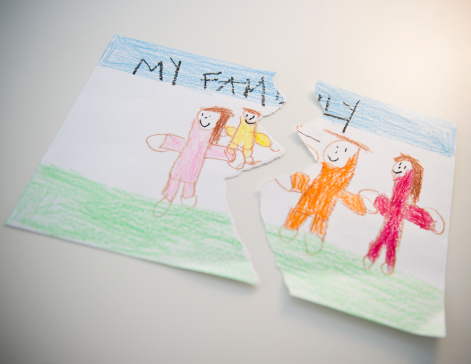 In”The Importance of Attachment: Part I“, I outlined the key developmental value of a secure attachment relationship between a child and a parent. Secure attachment is the foundation of resilience. Adverse life events, like a divorce, can be mastered by resilient children, especially if their secure attachments are not threatened by the divorce. As a Neutral Child Specialist, my goal is to make sure that the crisis of a divorce does not become a trauma for a child.
I recently attended a workshop on the Adult Attachment Interview (AAI), a series of questions that allows researchers to understand how well an adult has integrated his or her own life experiences, both positive and adverse. Adults who have managed to integrate their experiences into a coherent narrative are considered securely attached. Unfortunately, according to a number of research studies, only about half of all adults have secure attachments as measured by the AAI. The remainder have not been able to integrate adverse experiences, and remain either highly anxious or disconnected from them. Some insecurely attached adults who were traumatized as children live in constant emotional chaos. Researchers speculate that the quality of adult attachment is related to how capable a person is to form an emotionally safe, committed and loving relationship with another adult.
Numerous longitudinal research studies have discovered another impact of adult attachment. There is a very high level of correlation between how an adult responds on the AAI and the subsequent quality of attachment that adult is able to create with his or her own child. Compellingly, the life story a person tells on the AAI is a stronger predictor of quality of attachment with his or her child than actual observed parental behavior. In other words, the impact of emotional distress and trauma in childhood will reverberate across generations unless a parent gets the necessary support and healing to integrate his or her life into a coherent narrative. It is possible for adults to shift from insecurely attached to securely attached, but it requires the healing that comes from therapeutic relationships.
Obviously the best way to ensure secure attachments for generations of children is to prevent trauma in their lives. Of all the reasons to select a divorce process that supports respectful and healthy resolutions and builds the foundation for effective co-parenting, it is the legacy of secure attachment that will be left for your children and future generations. Collaborative Practice is one such process.
In”The Importance of Attachment: Part I“, I outlined the key developmental value of a secure attachment relationship between a child and a parent. Secure attachment is the foundation of resilience. Adverse life events, like a divorce, can be mastered by resilient children, especially if their secure attachments are not threatened by the divorce. As a Neutral Child Specialist, my goal is to make sure that the crisis of a divorce does not become a trauma for a child.
I recently attended a workshop on the Adult Attachment Interview (AAI), a series of questions that allows researchers to understand how well an adult has integrated his or her own life experiences, both positive and adverse. Adults who have managed to integrate their experiences into a coherent narrative are considered securely attached. Unfortunately, according to a number of research studies, only about half of all adults have secure attachments as measured by the AAI. The remainder have not been able to integrate adverse experiences, and remain either highly anxious or disconnected from them. Some insecurely attached adults who were traumatized as children live in constant emotional chaos. Researchers speculate that the quality of adult attachment is related to how capable a person is to form an emotionally safe, committed and loving relationship with another adult.
Numerous longitudinal research studies have discovered another impact of adult attachment. There is a very high level of correlation between how an adult responds on the AAI and the subsequent quality of attachment that adult is able to create with his or her own child. Compellingly, the life story a person tells on the AAI is a stronger predictor of quality of attachment with his or her child than actual observed parental behavior. In other words, the impact of emotional distress and trauma in childhood will reverberate across generations unless a parent gets the necessary support and healing to integrate his or her life into a coherent narrative. It is possible for adults to shift from insecurely attached to securely attached, but it requires the healing that comes from therapeutic relationships.
Obviously the best way to ensure secure attachments for generations of children is to prevent trauma in their lives. Of all the reasons to select a divorce process that supports respectful and healthy resolutions and builds the foundation for effective co-parenting, it is the legacy of secure attachment that will be left for your children and future generations. Collaborative Practice is one such process.





 Collaborative Divorce was started in Minnesota 25 years ago and has spread to more than 20 countries because it meets two basic needs felt by divorcing couples around the world. What does it mean to say that a divorce is Collaborative?
First, it is important to understand that difference between the formal Collaborative divorce process (with a capital C) and the use of the word collaborative. To be collaborative simply means to work together and, in that sense, any divorce in which people work together could be described as collaborative, (small c). However, the Collaborative divorce process is something distinctly different.
Most people want to keep their divorce amicable, and Collaborative Divorce gives them the tools to work out of court to make that happen. At the same, people facing divorce want to know that they are protected; that they have someone looking out for their interests. Collaborative Divorce provides each party with an attorney who will work with them to help them achieve their most meaningful goals.
In a Collaborative Divorce, the attorneys must withdraw if the matter goes to court in an adversarial proceedings. That is the one rule. A rule that is simple and yet, changes the entire tenor of the divorce negotiation. It is a great example of addition by subtracting. By subtracting one element, (the ability of the lawyers to fight), a door is opened to add many more valuable tools (true interest based-bargaining, teaming with financial experts and mental health professionals, deeper solutions, etc.). That one change redefines the negotiation and creates a ripple effect that, if handled in a skillful manner, creates many more options.
People sometimes hire aggressive lawyers, reluctantly; believing that their spouse will be aggressive and that they, therefore, need to “fight fire with fire”. The problem, of course, is that fighting fire with fire means there is a great risk that someone (maybe everyone) will get burned.
Collaborative Divorce, with the agreement not to fight, is intended to put out the fire, so that you, and your spouse, can build their future on solid ground. That is not easy to achieve. It requires skill and commitment. An attorney who cannot use argument and fighting must have other skills. Equally important, clients who intend to achieve their highest goals without fighting must be prepared to work on developing other skills as well.
To learn more about the Collaborative Process and to find experts with skill and experience in this area, go to
Collaborative Divorce was started in Minnesota 25 years ago and has spread to more than 20 countries because it meets two basic needs felt by divorcing couples around the world. What does it mean to say that a divorce is Collaborative?
First, it is important to understand that difference between the formal Collaborative divorce process (with a capital C) and the use of the word collaborative. To be collaborative simply means to work together and, in that sense, any divorce in which people work together could be described as collaborative, (small c). However, the Collaborative divorce process is something distinctly different.
Most people want to keep their divorce amicable, and Collaborative Divorce gives them the tools to work out of court to make that happen. At the same, people facing divorce want to know that they are protected; that they have someone looking out for their interests. Collaborative Divorce provides each party with an attorney who will work with them to help them achieve their most meaningful goals.
In a Collaborative Divorce, the attorneys must withdraw if the matter goes to court in an adversarial proceedings. That is the one rule. A rule that is simple and yet, changes the entire tenor of the divorce negotiation. It is a great example of addition by subtracting. By subtracting one element, (the ability of the lawyers to fight), a door is opened to add many more valuable tools (true interest based-bargaining, teaming with financial experts and mental health professionals, deeper solutions, etc.). That one change redefines the negotiation and creates a ripple effect that, if handled in a skillful manner, creates many more options.
People sometimes hire aggressive lawyers, reluctantly; believing that their spouse will be aggressive and that they, therefore, need to “fight fire with fire”. The problem, of course, is that fighting fire with fire means there is a great risk that someone (maybe everyone) will get burned.
Collaborative Divorce, with the agreement not to fight, is intended to put out the fire, so that you, and your spouse, can build their future on solid ground. That is not easy to achieve. It requires skill and commitment. An attorney who cannot use argument and fighting must have other skills. Equally important, clients who intend to achieve their highest goals without fighting must be prepared to work on developing other skills as well.
To learn more about the Collaborative Process and to find experts with skill and experience in this area, go to