
 If a ring is a sign of marriage, should there be a sign for divorce? How do you handle simple social situations and interactions regarding your divorce? Do you come right out and tell people you are divorced, wait until it comes up in conversation, or ignore it completely? What about when someone asks you if you have a family? When my recently divorced neighbor moved into my neighborhood they first thing I had asked him was if he had a family. Once you’re past 30 it seems to be the natural conversation maker, so now how do you respond to that question?
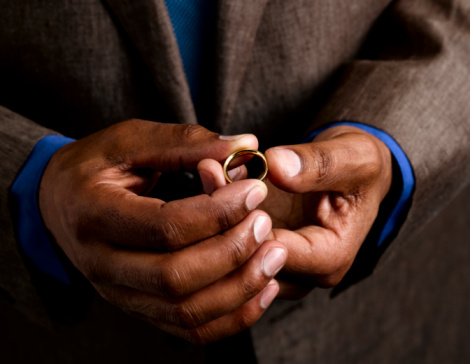
Some divorcees chose to keep wearing their wedding ring to possibly avoid these social situations, avoid the stigma of divorce, or maybe to avoid being hit on! Wedding rings are symbols of marriage, and once that marriage ends, it becomes unnecessary and possibly misleading to continue to wear a wedding ring. Some may wear the wedding ring on the opposite hand, or have it made into a different piece of jewelry. Interestingly enough, according to “Popular Mechanics” magazine British women in the 1920s would cut notches into their rings to symbolize divorce.
Having children brings up another societal stigma regarding having a ring on your finger. A recent conversation with a widowed friend brought forth this subject as well. She had been wearing her wedding ring for three years since her husband’s death. Feeling that closeness to him played a part in it, but she said she mainly continued to wear it because she didn’t want to feel that society was judging her for being a “single mom” when she was in public with her child. Divorced mothers can surely relate.
Many people struggle with what and how much to tell strangers, acquaintances, and co-workers. What do you think? Sometimes do you wish that there was a “sign” or “code” so that people just know and you can avoid the questions, would you rather keep it a secret when meeting new people, or are you open to questions? If a ring is a sign of marriage, should there be a sign for divorce? How do you handle simple social situations and interactions regarding your divorce? Do you come right out and tell people you are divorced, wait until it comes up in conversation, or ignore it completely? What about when someone asks you if you have a family? When my recently divorced neighbor moved into my neighborhood they first thing I had asked him was if he had a family. Once you’re past 30 it seems to be the natural conversation maker, so now how do you respond to that question?
Some divorcees chose to keep wearing their wedding ring to possibly avoid these social situations, avoid the stigma of divorce, or maybe to avoid being hit on! Wedding rings are symbols of marriage, and once that marriage ends, it becomes unnecessary and possibly misleading to continue to wear a wedding ring. Some may wear the wedding ring on the opposite hand, or have it made into a different piece of jewelry. Interestingly enough, according to “Popular Mechanics” magazine British women in the 1920s would cut notches into their rings to symbolize divorce.
Having children brings up another societal stigma regarding having a ring on your finger. A recent conversation with a widowed friend brought forth this subject as well. She had been wearing her wedding ring for three years since her husband’s death. Feeling that closeness to him played a part in it, but she said she mainly continued to wear it because she didn’t want to feel that society was judging her for being a “single mom” when she was in public with her child. Divorced mothers can surely relate.
Many people struggle with what and how much to tell strangers, acquaintances, and co-workers. What do you think? Sometimes do you wish that there was a “sign” or “code” so that people just know and you can avoid the questions, would you rather keep it a secret when meeting new people, or are you open to questions?
If a ring is a sign of marriage, should there be a sign for divorce? How do you handle simple social situations and interactions regarding your divorce? Do you come right out and tell people you are divorced, wait until it comes up in conversation, or ignore it completely? What about when someone asks you if you have a family? When my recently divorced neighbor moved into my neighborhood they first thing I had asked him was if he had a family. Once you’re past 30 it seems to be the natural conversation maker, so now how do you respond to that question?
Some divorcees chose to keep wearing their wedding ring to possibly avoid these social situations, avoid the stigma of divorce, or maybe to avoid being hit on! Wedding rings are symbols of marriage, and once that marriage ends, it becomes unnecessary and possibly misleading to continue to wear a wedding ring. Some may wear the wedding ring on the opposite hand, or have it made into a different piece of jewelry. Interestingly enough, according to “Popular Mechanics” magazine British women in the 1920s would cut notches into their rings to symbolize divorce.
Having children brings up another societal stigma regarding having a ring on your finger. A recent conversation with a widowed friend brought forth this subject as well. She had been wearing her wedding ring for three years since her husband’s death. Feeling that closeness to him played a part in it, but she said she mainly continued to wear it because she didn’t want to feel that society was judging her for being a “single mom” when she was in public with her child. Divorced mothers can surely relate.
Many people struggle with what and how much to tell strangers, acquaintances, and co-workers. What do you think? Sometimes do you wish that there was a “sign” or “code” so that people just know and you can avoid the questions, would you rather keep it a secret when meeting new people, or are you open to questions? If a ring is a sign of marriage, should there be a sign for divorce? How do you handle simple social situations and interactions regarding your divorce? Do you come right out and tell people you are divorced, wait until it comes up in conversation, or ignore it completely? What about when someone asks you if you have a family? When my recently divorced neighbor moved into my neighborhood they first thing I had asked him was if he had a family. Once you’re past 30 it seems to be the natural conversation maker, so now how do you respond to that question?
Some divorcees chose to keep wearing their wedding ring to possibly avoid these social situations, avoid the stigma of divorce, or maybe to avoid being hit on! Wedding rings are symbols of marriage, and once that marriage ends, it becomes unnecessary and possibly misleading to continue to wear a wedding ring. Some may wear the wedding ring on the opposite hand, or have it made into a different piece of jewelry. Interestingly enough, according to “Popular Mechanics” magazine British women in the 1920s would cut notches into their rings to symbolize divorce.
Having children brings up another societal stigma regarding having a ring on your finger. A recent conversation with a widowed friend brought forth this subject as well. She had been wearing her wedding ring for three years since her husband’s death. Feeling that closeness to him played a part in it, but she said she mainly continued to wear it because she didn’t want to feel that society was judging her for being a “single mom” when she was in public with her child. Divorced mothers can surely relate.
Many people struggle with what and how much to tell strangers, acquaintances, and co-workers. What do you think? Sometimes do you wish that there was a “sign” or “code” so that people just know and you can avoid the questions, would you rather keep it a secret when meeting new people, or are you open to questions?  Collaborative Divorce was started in Minnesota 25 years ago and has spread to more than 20 countries because it meets two basic needs felt by divorcing couples around the world. What does it mean to say that a divorce is Collaborative?
First, it is important to understand that difference between the formal Collaborative divorce process (with a capital C) and the use of the word collaborative. To be collaborative simply means to work together and, in that sense, any divorce in which people work together could be described as collaborative, (small c). However, the Collaborative divorce process is something distinctly different.
Most people want to keep their divorce amicable, and Collaborative Divorce gives them the tools to work out of court to make that happen. At the same, people facing divorce want to know that they are protected; that they have someone looking out for their interests. Collaborative Divorce provides each party with an attorney who will work with them to help them achieve their most meaningful goals.
In a Collaborative Divorce, the attorneys must withdraw if the matter goes to court in an adversarial proceedings. That is the one rule. A rule that is simple and yet, changes the entire tenor of the divorce negotiation. It is a great example of addition by subtracting. By subtracting one element, (the ability of the lawyers to fight), a door is opened to add many more valuable tools (true interest based-bargaining, teaming with financial experts and mental health professionals, deeper solutions, etc.). That one change redefines the negotiation and creates a ripple effect that, if handled in a skillful manner, creates many more options.
People sometimes hire aggressive lawyers, reluctantly; believing that their spouse will be aggressive and that they, therefore, need to “fight fire with fire”. The problem, of course, is that fighting fire with fire means there is a great risk that someone (maybe everyone) will get burned.
Collaborative Divorce, with the agreement not to fight, is intended to put out the fire, so that you, and your spouse, can build their future on solid ground. That is not easy to achieve. It requires skill and commitment. An attorney who cannot use argument and fighting must have other skills. Equally important, clients who intend to achieve their highest goals without fighting must be prepared to work on developing other skills as well.
To learn more about the Collaborative Process and to find experts with skill and experience in this area, go to
Collaborative Divorce was started in Minnesota 25 years ago and has spread to more than 20 countries because it meets two basic needs felt by divorcing couples around the world. What does it mean to say that a divorce is Collaborative?
First, it is important to understand that difference between the formal Collaborative divorce process (with a capital C) and the use of the word collaborative. To be collaborative simply means to work together and, in that sense, any divorce in which people work together could be described as collaborative, (small c). However, the Collaborative divorce process is something distinctly different.
Most people want to keep their divorce amicable, and Collaborative Divorce gives them the tools to work out of court to make that happen. At the same, people facing divorce want to know that they are protected; that they have someone looking out for their interests. Collaborative Divorce provides each party with an attorney who will work with them to help them achieve their most meaningful goals.
In a Collaborative Divorce, the attorneys must withdraw if the matter goes to court in an adversarial proceedings. That is the one rule. A rule that is simple and yet, changes the entire tenor of the divorce negotiation. It is a great example of addition by subtracting. By subtracting one element, (the ability of the lawyers to fight), a door is opened to add many more valuable tools (true interest based-bargaining, teaming with financial experts and mental health professionals, deeper solutions, etc.). That one change redefines the negotiation and creates a ripple effect that, if handled in a skillful manner, creates many more options.
People sometimes hire aggressive lawyers, reluctantly; believing that their spouse will be aggressive and that they, therefore, need to “fight fire with fire”. The problem, of course, is that fighting fire with fire means there is a great risk that someone (maybe everyone) will get burned.
Collaborative Divorce, with the agreement not to fight, is intended to put out the fire, so that you, and your spouse, can build their future on solid ground. That is not easy to achieve. It requires skill and commitment. An attorney who cannot use argument and fighting must have other skills. Equally important, clients who intend to achieve their highest goals without fighting must be prepared to work on developing other skills as well.
To learn more about the Collaborative Process and to find experts with skill and experience in this area, go to 




 The longer I work as a