I’m sharing this post with my readers because of the simple message of opportunity it carries for anyone facing divorce. If you know of someone about to face divorce, you would be doing him or her a great favor by sharing this article. You will help educate, inform, and provide the opportunity for choice and hope not only for the person you know, but also for their entire family.
This post is reprinted here with permission of Pauline Tesler, a Collaborative colleague who hails from California. Pauline is the co-founder and first president of the International Academy of Collaborative Professionals, frequent lecturer, and trainer.
Divorce as Temporary “Diminished Capacity”
You don’t need to be a lawyer or a psychologist to know that going through a divorce is one of life’s roughest passages. It can cause a myriad of emotional responses that can at times feel overwhelming and limit your ability to think clearly or make good choices. Unfortunately, this occurs at the very time you are called upon to make some of the most important decisions of your life.
For many people, the ending of a marriage is a time of temporary “diminished capacity.” By diminished capacity, we mean a period during which the person you thought you were on your best days—competent, thoughtful, considerate, reasonable, fair-minded, resilient—disappears for days or weeks at a time. The person you generally know yourself to be gets replaced temporarily by an unfamiliar and frightening self who can hardly summon up enough energy to get out of bed, wallows in fear, confusion or anger, or jumps to hasty conclusions in order to end the conflicting impulses about what to do and how to behave.
Recovering from the shock of a failed marriage involves moving through that initial period of diminished capacity, until gradually, more and more of the time, your pre-divorce “best-self” is back at the helm. Most people can expect to feel something like their old, pre-divorce selves in eighteen to twenty-four months from the time of the divorce decree, though it happens more quickly for some and more slowly for many. During that recovery period, it is quite common for people to veer suddenly and dramatically from day to day, or even hour to hour, between optimism and darkest pessimism, between cooperative good humor and frightening rage.
You may be experiencing such intense emotions as you come to terms with the possible—or actual—ending of your marriage. Most people do, at least some of the time. Keeping the focus on best intentions and good decision making in light of that reality is what collaborative divorce is all about.
Thinking clearly about what kind of divorce you want and how you’ll get there may be an unfamiliar concept to you. Most people are surprised to learn that the choices made right at the start of the divorce process have great impact on what kind of a divorce experience they will have. Even when people do understand the high stakes of those early choices, thinking clearly and making intelligent choices at that time can be very challenging, because divorce is an emotional wild ride like no other. Even very reasonable and civilized people can find unexpected, hard-to-manage emotions popping up at the most inconvenient times, particularly during the early months of a separation and divorce—exactly the time when you will be making decisions that determine what kind of divorce you are likely to get, and how your divorce will affect the rest of your life.
When you choose collaborative divorce, a team of professional helpers from the fields of law, psychology, and finance will provide coordinated support and guidance to help you and your partner slow down, reflect, focus on values, aspire to high goals, make good choices, work together constructively while avoiding court, plan for the future, and reach deep resolution. In our experience, this kind of coordinated professional help isn’t available anywhere else but in collaborative divorce. If you choose it, you and your spouse can count on professional advice and counsel that will:
- encourage both of you to remember your goal: the best divorce the two of you are capable of achieving
- educate and remind you about the divorce grief and recovery process so that you can choose to operate from your hopes rather than your fears
- help you focus on the future rather than the past, and on your deepest personal values and goals for the future rather than what the local judge is permitted to order
- make it possible for your financial advice to come from a financial expert, and your parenting advice to come from a child specialist, so that your lawyer is freed to do what lawyers do best: help you reach well-considered resolution
- keep you and your spouse focused on how your children are really doing, and how the two of you can help them move through the divorce with the least possible pain and “collateral damage”
- teach both of you new understanding and skills that will help you be more effective co-parents after the divorce than you may be capable of right now as your marriage ends
- make sure you and your spouse have all the information you’ll need to make wise decisions—not just information about the law, but also about finance, child development, grief and recovery, family systems, negotiating techniques, and anything else that will help you devise creative lasting solutions
- emphasize consensus and real resolution, not horse-trading and quick fixes
- help you maintain maximum privacy, creativity, and self-determination in your divorce.
Divorce is never easy, but making the collaborative choice helps you to move through a challenging life passage with dignity, intelligence, and respect.
[Excerpted and adapted from Introduction and Chapter One of
Collaborative Divorce: The Revolutionary New Way to Restructure Your Family, Resolve Legal Issues, and Move on with Your Life, by Pauline H. Tesler, J.D., and Peggy Thompson, Ph.D.]
To learn more about Collaborative Divorce here in Minnesota check out our website at
www.collaborativelaw.org.


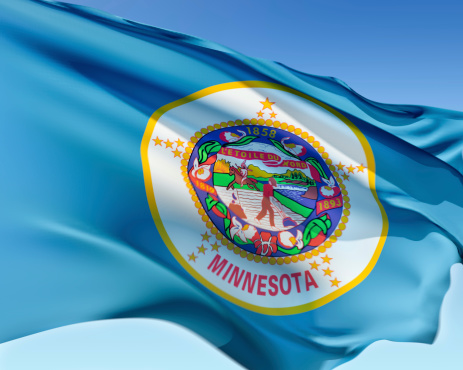 Because of our great medical facilities, people often say that Minnesota might be the best place in the world to get sick. What is less known is that Minnesota is rapidly becoming known as the best place for an ailing marriage too. Indeed, just as people travel all over the world to come to the Mayo Clinic to heal their bodies, people from around the world occasionally travel to Minnesota to observe the ways that we heal conflict.
Last month, two family law attorneys from Cape Town, South Africa, spent most of the month of May at the Collaborative Alliance in Edina, observing many of our Collaborative divorce professionals so that they can improve the way family conflict is handled in their country. Two weeks earlier, a family law attorney from Rio de Janeiro, Brazil, visited the Collaborative Alliance space and asked if she could also send an observer from her country in the upcoming months. Indeed, we have hosted family law professionals from five different countries and nearly every state during the past six years.
I realize that, if you have a healthy marriage, finding that Minnesota is a great place for a divorce may not be reason to jump up for joy. No one wants to be in the position to need a divorce lawyer anymore than anyone wants to need a good oncologist. But, if you are facing serious problems, it’s nice to know you can reach out and find some of the very best in the world.
So, why is Minnesota an international leader in handling conflict? Is it because of our superior laws, our better courts, better law schools are lawyers? Well, in fact, while all of those things are very good in our state, the thing that is causing people to travel to Minnesota from afar is our innovation. Divorce causes great pain around the world and nearly everyone is desperate to find a better way. Minnesota is, among other things, the birthplace of Collaborative Law, a method of handling divorce that has spared tens of thousands of families. To learn more about Collaborative Practice, go to www.collaborativelaw.org.
As someone who has handled hundreds of Collaborative divorce (as well as hundreds of traditional divorces), I am not surprised that people from around the United States would want to learn about this better method. However, I admit that I was a bit surprised to learn that about the great interest all around the world. I have had the opportunity to conduct workshops and trainings on Collaborative law throughout the world and I have observed great differences in their laws and in their cultural norms. What has surprised me is that, when it comes to basic issues, protecting children, reducing conflict, reducing costs we are all facing the same issue. Collaborative Divorce is more effective, not because of something unique to Minnesotan or Americans, but because if makes divorce more human. And that is a language that is understood all around the world.
Because of our great medical facilities, people often say that Minnesota might be the best place in the world to get sick. What is less known is that Minnesota is rapidly becoming known as the best place for an ailing marriage too. Indeed, just as people travel all over the world to come to the Mayo Clinic to heal their bodies, people from around the world occasionally travel to Minnesota to observe the ways that we heal conflict.
Last month, two family law attorneys from Cape Town, South Africa, spent most of the month of May at the Collaborative Alliance in Edina, observing many of our Collaborative divorce professionals so that they can improve the way family conflict is handled in their country. Two weeks earlier, a family law attorney from Rio de Janeiro, Brazil, visited the Collaborative Alliance space and asked if she could also send an observer from her country in the upcoming months. Indeed, we have hosted family law professionals from five different countries and nearly every state during the past six years.
I realize that, if you have a healthy marriage, finding that Minnesota is a great place for a divorce may not be reason to jump up for joy. No one wants to be in the position to need a divorce lawyer anymore than anyone wants to need a good oncologist. But, if you are facing serious problems, it’s nice to know you can reach out and find some of the very best in the world.
So, why is Minnesota an international leader in handling conflict? Is it because of our superior laws, our better courts, better law schools are lawyers? Well, in fact, while all of those things are very good in our state, the thing that is causing people to travel to Minnesota from afar is our innovation. Divorce causes great pain around the world and nearly everyone is desperate to find a better way. Minnesota is, among other things, the birthplace of Collaborative Law, a method of handling divorce that has spared tens of thousands of families. To learn more about Collaborative Practice, go to www.collaborativelaw.org.
As someone who has handled hundreds of Collaborative divorce (as well as hundreds of traditional divorces), I am not surprised that people from around the United States would want to learn about this better method. However, I admit that I was a bit surprised to learn that about the great interest all around the world. I have had the opportunity to conduct workshops and trainings on Collaborative law throughout the world and I have observed great differences in their laws and in their cultural norms. What has surprised me is that, when it comes to basic issues, protecting children, reducing conflict, reducing costs we are all facing the same issue. Collaborative Divorce is more effective, not because of something unique to Minnesotan or Americans, but because if makes divorce more human. And that is a language that is understood all around the world.