

Divorce is unfair in that is often asks people to make some of the most important decisions in their lives at a time when they may be impaired by many emotions, including grief.
Many clients experiencing divorce have described the process as feeling like dealing with a death. It is true that no person dies, and therefore the analogy of death is not perfect, but a marriage dies and some amount of grief would seem quite natural. In addition, grieving the loss of a marriage can be complicated because there is less of a support network. As a culture, we have learned how to help people grieve death. However, the people in your support network may not know how to help you grieve the loss of your marriage, and that can cause them to respond with either anger or avoidance instead.
One of the significant trends in our society is an increased understanding of the role of hospice when someone in approaching death. Hospice occurs after all efforts to preserve life have been exhausted. At that time, the focus of the medical team and support personnel turns away from finding a medical “solution” and toward providing comfort and care and preparation for what lies ahead.
It may seem odd, to think about hospice for a dying marriage, but many of the same principles may apply. If all efforts to save the marriage have been exhausted, it may be best for the legal team, as well as friends and family, to switch to providing comfort, and, perhaps, to finding time to grieve.
Giving divorcing clients time to grieve, and providing resources to help them with the grief, (including options such as coaching, or divorce closure counseling), could help people make better decisions when they are ready to focus on divorce details.
If you are facing divorce, and feel like you need time to grieve, it is important to select a divorce team that understands why this is important, and to fully explore your divorce options so that your emotional health can be taken into account. To learn more, go to www.collaborativelaw.org or www.divorcechoice.com.
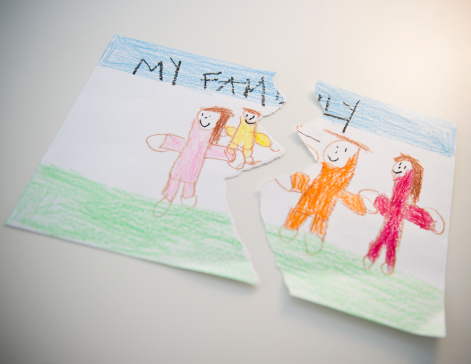 In”The Importance of Attachment: Part I“, I outlined the key developmental value of a secure attachment relationship between a child and a parent. Secure attachment is the foundation of resilience. Adverse life events, like a divorce, can be mastered by resilient children, especially if their secure attachments are not threatened by the divorce. As a Neutral Child Specialist, my goal is to make sure that the crisis of a divorce does not become a trauma for a child.
I recently attended a workshop on the Adult Attachment Interview (AAI), a series of questions that allows researchers to understand how well an adult has integrated his or her own life experiences, both positive and adverse. Adults who have managed to integrate their experiences into a coherent narrative are considered securely attached. Unfortunately, according to a number of research studies, only about half of all adults have secure attachments as measured by the AAI. The remainder have not been able to integrate adverse experiences, and remain either highly anxious or disconnected from them. Some insecurely attached adults who were traumatized as children live in constant emotional chaos. Researchers speculate that the quality of adult attachment is related to how capable a person is to form an emotionally safe, committed and loving relationship with another adult.
Numerous longitudinal research studies have discovered another impact of adult attachment. There is a very high level of correlation between how an adult responds on the AAI and the subsequent quality of attachment that adult is able to create with his or her own child. Compellingly, the life story a person tells on the AAI is a stronger predictor of quality of attachment with his or her child than actual observed parental behavior. In other words, the impact of emotional distress and trauma in childhood will reverberate across generations unless a parent gets the necessary support and healing to integrate his or her life into a coherent narrative. It is possible for adults to shift from insecurely attached to securely attached, but it requires the healing that comes from therapeutic relationships.
Obviously the best way to ensure secure attachments for generations of children is to prevent trauma in their lives. Of all the reasons to select a divorce process that supports respectful and healthy resolutions and builds the foundation for effective co-parenting, it is the legacy of secure attachment that will be left for your children and future generations. Collaborative Practice is one such process.
In”The Importance of Attachment: Part I“, I outlined the key developmental value of a secure attachment relationship between a child and a parent. Secure attachment is the foundation of resilience. Adverse life events, like a divorce, can be mastered by resilient children, especially if their secure attachments are not threatened by the divorce. As a Neutral Child Specialist, my goal is to make sure that the crisis of a divorce does not become a trauma for a child.
I recently attended a workshop on the Adult Attachment Interview (AAI), a series of questions that allows researchers to understand how well an adult has integrated his or her own life experiences, both positive and adverse. Adults who have managed to integrate their experiences into a coherent narrative are considered securely attached. Unfortunately, according to a number of research studies, only about half of all adults have secure attachments as measured by the AAI. The remainder have not been able to integrate adverse experiences, and remain either highly anxious or disconnected from them. Some insecurely attached adults who were traumatized as children live in constant emotional chaos. Researchers speculate that the quality of adult attachment is related to how capable a person is to form an emotionally safe, committed and loving relationship with another adult.
Numerous longitudinal research studies have discovered another impact of adult attachment. There is a very high level of correlation between how an adult responds on the AAI and the subsequent quality of attachment that adult is able to create with his or her own child. Compellingly, the life story a person tells on the AAI is a stronger predictor of quality of attachment with his or her child than actual observed parental behavior. In other words, the impact of emotional distress and trauma in childhood will reverberate across generations unless a parent gets the necessary support and healing to integrate his or her life into a coherent narrative. It is possible for adults to shift from insecurely attached to securely attached, but it requires the healing that comes from therapeutic relationships.
Obviously the best way to ensure secure attachments for generations of children is to prevent trauma in their lives. Of all the reasons to select a divorce process that supports respectful and healthy resolutions and builds the foundation for effective co-parenting, it is the legacy of secure attachment that will be left for your children and future generations. Collaborative Practice is one such process.
 Did you wake up today and think to yourself, out of the blue, “I want a divorce.”? Not likely. Often divorce lingers in one’s mind and consumes one’s thoughts more months, even years. Contemplating divorce involves a lengthy process of weighing pros and cons, thinking about life without your spouse, what things will be like for the kids, managing finances, maybe having to go back to work or change jobs to make ends meet on a single income, and many other scenarios. Even once all things have been taken into consideration people sometimes get stuck on bringing it up with their spouse, that alone could take months. Then once they do bring it up, the spouse might convince them to stay and work things out. Months, maybe years later sometimes this cycle begins again.
There are no right or wrong answers when considering how long you should “think” about it before filing for a divorce. Some circumstances beget immediate consideration, while many wish to attempt marriage counseling and other resolutions first. Whatever then length of time that you’ve been considering a divorce, here are some important steps to take before going forward:
Did you wake up today and think to yourself, out of the blue, “I want a divorce.”? Not likely. Often divorce lingers in one’s mind and consumes one’s thoughts more months, even years. Contemplating divorce involves a lengthy process of weighing pros and cons, thinking about life without your spouse, what things will be like for the kids, managing finances, maybe having to go back to work or change jobs to make ends meet on a single income, and many other scenarios. Even once all things have been taken into consideration people sometimes get stuck on bringing it up with their spouse, that alone could take months. Then once they do bring it up, the spouse might convince them to stay and work things out. Months, maybe years later sometimes this cycle begins again.
There are no right or wrong answers when considering how long you should “think” about it before filing for a divorce. Some circumstances beget immediate consideration, while many wish to attempt marriage counseling and other resolutions first. Whatever then length of time that you’ve been considering a divorce, here are some important steps to take before going forward:
- Make copies of federal and state income tax returns from the past five years.
- If you don’t have a credit card in your name, open one up in case of an emergency.
- Establish online access to your joint bank accounts and check the account regularly for any unusual activity, which could include excessive spending or withdrawals.
- If you have a safety deposit box, photograph and inventory the contents.
- Obtain a copy of your credit report to see if you have any liabilities you might be unaware of.
- Obtain a copy of your will and powers of attorney.
- Go for a consultation with a divorce attorney even if you are still unsure if you want a divorce. Knowledge is power.
- Consider seeing a therapist for your own sanity and an unbiased opinion.
- Remember that, “Divorce isn’t such a tragedy… a tragedy is staying in an unhappy marriage, teaching your children the wrong things about love. Nobody ever died of divorce.” – quote by Jennifer Weiner, Author.
 Our last blog post from Daisy Camp discussed ways you can avoid going to trial in a divorce. The last thing anyone wants is to go to trial, but sometimes going to trial is simply unavoidable. The good thing is, less than 5 percent of divorce cases go to trial, but what if you find yourself amongst that 5 percent? What can you expect in a divorce trial?
Judges generally try to help you resolve your case before the trial date, but sometimes that is simply impossible. If, after months, and sometimes even years of negotiations, you and your soon-to-be-ex-spouse still have not reached an agreement, your last recourse is to have a trial. Divorce trials typically do not involve juries, but are held by a judge in the judge’s chamber. The judge reviews volumes of documents, hears evidence from each spouse, your respective divorce attorneys, possibly witnesses, and then come to a decision based on evidence.
Trials can be as short as half a day or as long as several months (although that would probably be unusual for a divorce trial). The length of a trial depends on the number of witnesses, how long each examination takes, and what motions are made during the course of the trial. The emotional and financial costs rapidly add up. Divorces can be very expensive, but divorces that go to trial are even more costly, both financially as well as emotionally.
According to the book “The Collaborative Way to Divorce” by Collaborative Attorneys, Stuart Wells & Ron Ousky, “When divorcing the “traditional way” settlement may only happen only after you or your spouse have been to court on one or more occasion, for temporary hearings, settlement conferences, and so on. Sometimes these cases settle within days or hours before the trial is scheduled to begin – after you and your spouse have already incurred most of the financial and emotional cost of preparing for trial.” In these cases although the trial was avoided, the damage is already done.
Our last blog post from Daisy Camp discussed ways you can avoid going to trial in a divorce. The last thing anyone wants is to go to trial, but sometimes going to trial is simply unavoidable. The good thing is, less than 5 percent of divorce cases go to trial, but what if you find yourself amongst that 5 percent? What can you expect in a divorce trial?
Judges generally try to help you resolve your case before the trial date, but sometimes that is simply impossible. If, after months, and sometimes even years of negotiations, you and your soon-to-be-ex-spouse still have not reached an agreement, your last recourse is to have a trial. Divorce trials typically do not involve juries, but are held by a judge in the judge’s chamber. The judge reviews volumes of documents, hears evidence from each spouse, your respective divorce attorneys, possibly witnesses, and then come to a decision based on evidence.
Trials can be as short as half a day or as long as several months (although that would probably be unusual for a divorce trial). The length of a trial depends on the number of witnesses, how long each examination takes, and what motions are made during the course of the trial. The emotional and financial costs rapidly add up. Divorces can be very expensive, but divorces that go to trial are even more costly, both financially as well as emotionally.
According to the book “The Collaborative Way to Divorce” by Collaborative Attorneys, Stuart Wells & Ron Ousky, “When divorcing the “traditional way” settlement may only happen only after you or your spouse have been to court on one or more occasion, for temporary hearings, settlement conferences, and so on. Sometimes these cases settle within days or hours before the trial is scheduled to begin – after you and your spouse have already incurred most of the financial and emotional cost of preparing for trial.” In these cases although the trial was avoided, the damage is already done.  As a collaborative law professional, I work with divorcing couples on out-of-court resolutions that meet big picture goals and interests. It is challenging work that I have dedicated my career to and I strive daily to provide the highest level of service.
As a general practice, I check in with my clients a year or so after the divorce to see how things are going. I genuinely care about my clients and enjoy learning where they are at after a divorce and what accomplishments and challenges they have faced after the transition. While many traditional, court-based divorce attorneys hear from their clients often with post-decree disputes or modifications, I believe if I have done my job most effectively, clients will be prepared to handle most everything that comes up after a divorce on their own. More often than not, the only way I know how my clients are navigating a post-divorce world, is to reach out and ask them.
I recently heard from two former clients.
First, I heard from a spouse who had one of the more challenging financial situations I have dealt with. There was significant debt and substantial expenses (as there often are) and they had shared some unique financial goals regarding their investments and retirements moving forward. They also agreed to share future income in a manner that was unique in the eyes of the law, yet suited their big picture goals. The parents agreed on many parenting issues, but both had personal experiences with bad divorces in their own childhoods, so they were apprehensive and untrusting of the other. They also intended to move out-of-state for the main wage-earner’s work once the children finished the school-year, although there was concern on follow through with this agreement.
I heard from this client that the move happened without a hitch and they have peacefully transitioned into two homes in a new community. The children are thriving with the help of good communication and some family counseling. I heard from my client that “things are better than I expected” and that my client truly believes they are both doing really well. Most importantly, my client was excited to share the accomplishments of the children, yet sharing truthfully some of the difficulties they have had with the transition. This client expressed gratitude for a collaborative divorce process that allowed them to acknowledge the positives in their relationship and preserve what works, while restructuring things for a better future.
My other client had recently navigated his Wife getting remarried. He provided spousal maintenance to his ex-Wife and the decree had contemplated the financial circumstances changing upon remarriage if either spouse requested such a review. My client informed me that despite the decree allowing for a review, he had decided not to do so because he wanted to continue to support his ex-Wife in a financially stable situation for the benefit of his children. Even though he could have likely lessened his obligation, he felt most comfortable with maintaining the status quo and continuing support. Like my other client, he thanked me for providing a process that allowed him the flexibility to decide what feels right but also preserved the respect and caring he shares for his ex-Wife. Indeed, that respect has benefited her greatly as well through the support.
In my years of experience and check-ins with clients, I am continuously impressed by the level of gratitude clients express for the collaborative process. It is a process that creates unique outcomes tailored to each family’s needs and, I believe, results in longer lasting agreements and stronger post-divorce relationships.
As a collaborative law professional, I work with divorcing couples on out-of-court resolutions that meet big picture goals and interests. It is challenging work that I have dedicated my career to and I strive daily to provide the highest level of service.
As a general practice, I check in with my clients a year or so after the divorce to see how things are going. I genuinely care about my clients and enjoy learning where they are at after a divorce and what accomplishments and challenges they have faced after the transition. While many traditional, court-based divorce attorneys hear from their clients often with post-decree disputes or modifications, I believe if I have done my job most effectively, clients will be prepared to handle most everything that comes up after a divorce on their own. More often than not, the only way I know how my clients are navigating a post-divorce world, is to reach out and ask them.
I recently heard from two former clients.
First, I heard from a spouse who had one of the more challenging financial situations I have dealt with. There was significant debt and substantial expenses (as there often are) and they had shared some unique financial goals regarding their investments and retirements moving forward. They also agreed to share future income in a manner that was unique in the eyes of the law, yet suited their big picture goals. The parents agreed on many parenting issues, but both had personal experiences with bad divorces in their own childhoods, so they were apprehensive and untrusting of the other. They also intended to move out-of-state for the main wage-earner’s work once the children finished the school-year, although there was concern on follow through with this agreement.
I heard from this client that the move happened without a hitch and they have peacefully transitioned into two homes in a new community. The children are thriving with the help of good communication and some family counseling. I heard from my client that “things are better than I expected” and that my client truly believes they are both doing really well. Most importantly, my client was excited to share the accomplishments of the children, yet sharing truthfully some of the difficulties they have had with the transition. This client expressed gratitude for a collaborative divorce process that allowed them to acknowledge the positives in their relationship and preserve what works, while restructuring things for a better future.
My other client had recently navigated his Wife getting remarried. He provided spousal maintenance to his ex-Wife and the decree had contemplated the financial circumstances changing upon remarriage if either spouse requested such a review. My client informed me that despite the decree allowing for a review, he had decided not to do so because he wanted to continue to support his ex-Wife in a financially stable situation for the benefit of his children. Even though he could have likely lessened his obligation, he felt most comfortable with maintaining the status quo and continuing support. Like my other client, he thanked me for providing a process that allowed him the flexibility to decide what feels right but also preserved the respect and caring he shares for his ex-Wife. Indeed, that respect has benefited her greatly as well through the support.
In my years of experience and check-ins with clients, I am continuously impressed by the level of gratitude clients express for the collaborative process. It is a process that creates unique outcomes tailored to each family’s needs and, I believe, results in longer lasting agreements and stronger post-divorce relationships.  While it is possible to file for divorce in Minnesota on your own, without legal representation, it can be difficult to manage, not only legally but also emotionally. Here are some reasons to have an attorney and NOT try and represent yourself:
- When you represent yourself, you are unable to be objective. It is hard to weigh the options and make decisions in your own best interest if you are alone.
- While you may save in attorney’s fees, as a novice in the legal arena, you do not know what it means to file a pleading or handle a case. You may also not know that you have other options on process – a collaborative divorce or mediation may provide better outcomes.
- When you represent yourself, there are held to the same standard as all other clients. This means that the court will have the same expectations of you as it would of a licensed attorney representing a client.
- If there are any contentious issues, such as parenting differences, safety concerns, or financial matters, it may be important that you have the best knowledge and skills available to make sure that your needs are addressed.
 I have practiced law for almost 15 years. As a collaborative divorce attorney and mental health professional, I fundamentally believe my non-adversarial approach is better for children. The outcomes protect children’s best interests and provides them the best opportunity to thrive in a future, bi-nuclear family. Research confirms this notion, but not until recently was my personal belief proven in my practice.
For the first time in my career, I had a potential client come into my office who was referred to me by her 12 year old son. This woman and her husband had decided to divorce and before starting the legal process told the children. They sat down their 12 year old son and 9 year old daughter and told them that mom and dad had decided to get divorced. Amongst the various reactions, their son asked “could you get divorced in the way Tommy’s parents divorced?” Their son said of all his friends with divorced parents (as expected, there are many) he noticed that there was something different about Tommy’s parents and the way they divorced. They were different, he told his parents, and that was what he wanted.
At their son’s request, the parents reached out to Tommy’s parents to learn more. Tommy’s parents had had a collaborative divorce. Despite great challenges emotionally and financially, Tommy’s parents had put their greatest interests ahead of individual gain and brought their best selves to the divorce process. The outcomes reached were unique and tailored to provide the very best for everyone in Tommy’s family. Tommy probably didn’t know his parents “did divorce” differently. Tommy just experienced what he experienced…but his friend noticed. I represented Tommy’s dad in his collaborative divorce and I am so grateful that kids notice how well Tommy is doing.
This experience is a reassuring and lovely example of the far-reaching benefit of collaborative law. It shows that children really do notice and, more importantly, the community at large can see how children of divorce can thrive … If the divorce is done well.
Kids notice.
I have practiced law for almost 15 years. As a collaborative divorce attorney and mental health professional, I fundamentally believe my non-adversarial approach is better for children. The outcomes protect children’s best interests and provides them the best opportunity to thrive in a future, bi-nuclear family. Research confirms this notion, but not until recently was my personal belief proven in my practice.
For the first time in my career, I had a potential client come into my office who was referred to me by her 12 year old son. This woman and her husband had decided to divorce and before starting the legal process told the children. They sat down their 12 year old son and 9 year old daughter and told them that mom and dad had decided to get divorced. Amongst the various reactions, their son asked “could you get divorced in the way Tommy’s parents divorced?” Their son said of all his friends with divorced parents (as expected, there are many) he noticed that there was something different about Tommy’s parents and the way they divorced. They were different, he told his parents, and that was what he wanted.
At their son’s request, the parents reached out to Tommy’s parents to learn more. Tommy’s parents had had a collaborative divorce. Despite great challenges emotionally and financially, Tommy’s parents had put their greatest interests ahead of individual gain and brought their best selves to the divorce process. The outcomes reached were unique and tailored to provide the very best for everyone in Tommy’s family. Tommy probably didn’t know his parents “did divorce” differently. Tommy just experienced what he experienced…but his friend noticed. I represented Tommy’s dad in his collaborative divorce and I am so grateful that kids notice how well Tommy is doing.
This experience is a reassuring and lovely example of the far-reaching benefit of collaborative law. It shows that children really do notice and, more importantly, the community at large can see how children of divorce can thrive … If the divorce is done well.
Kids notice.  A large component of a divorce is dividing the assets that you and your spouse accumulated during your marriage. Now that the divorce decree is completed, it is essential to start retitling assets as soon as possible. Retitling of assets confers control by defining ownership and restricting access.
A good way to begin this process is to create a personal net worth statement that lists all of your assets and liabilities, per the divorce decree. This statement will serve as the master checklist in your retitling process. Every asset has its own retitling requirements, but essential to the process are the following documents:
A large component of a divorce is dividing the assets that you and your spouse accumulated during your marriage. Now that the divorce decree is completed, it is essential to start retitling assets as soon as possible. Retitling of assets confers control by defining ownership and restricting access.
A good way to begin this process is to create a personal net worth statement that lists all of your assets and liabilities, per the divorce decree. This statement will serve as the master checklist in your retitling process. Every asset has its own retitling requirements, but essential to the process are the following documents:
- Current Identification, reflecting any name change if applicable
- Certified Divorce Decree (see our blog on changing your name)
- Account information for bank accounts, investments, loans and credit cards
- Social Security numbers for both you and your ex-spouse
- Each of you open individual accounts in your own name
- Complete a letter (called a “letter of instruction”) explaining that due to divorce, you would like to divide your joint account per the divorce decree, and clarify how the joint account should be divided.
- Both of you sign the letter
- Have the letter notarized (banks accounts, etc.) or, Signature or Medallion guaranteed (for investment accounts; it will depend upon the specific investment company as to which guarantee is required). A notary is quite common and can be found at many institutions. Both as signature and medallion guarantee can be obtained at a bank, credit union or investment company (note that this is different than being notarized).
- Mail the letter along with a certified divorce decree to the company.
 If a ring is a sign of marriage, should there be a sign for divorce? How do you handle simple social situations and interactions regarding your divorce? Do you come right out and tell people you are divorced, wait until it comes up in conversation, or ignore it completely? What about when someone asks you if you have a family? When my recently divorced neighbor moved into my neighborhood they first thing I had asked him was if he had a family. Once you’re past 30 it seems to be the natural conversation maker, so now how do you respond to that question?
Some divorcees chose to keep wearing their wedding ring to possibly avoid these social situations, avoid the stigma of divorce, or maybe to avoid being hit on! Wedding rings are symbols of marriage, and once that marriage ends, it becomes unnecessary and possibly misleading to continue to wear a wedding ring. Some may wear the wedding ring on the opposite hand, or have it made into a different piece of jewelry. Interestingly enough, according to “Popular Mechanics” magazine British women in the 1920s would cut notches into their rings to symbolize divorce.
Having children brings up another societal stigma regarding having a ring on your finger. A recent conversation with a widowed friend brought forth this subject as well. She had been wearing her wedding ring for three years since her husband’s death. Feeling that closeness to him played a part in it, but she said she mainly continued to wear it because she didn’t want to feel that society was judging her for being a “single mom” when she was in public with her child. Divorced mothers can surely relate.
Many people struggle with what and how much to tell strangers, acquaintances, and co-workers. What do you think? Sometimes do you wish that there was a “sign” or “code” so that people just know and you can avoid the questions, would you rather keep it a secret when meeting new people, or are you open to questions?
If a ring is a sign of marriage, should there be a sign for divorce? How do you handle simple social situations and interactions regarding your divorce? Do you come right out and tell people you are divorced, wait until it comes up in conversation, or ignore it completely? What about when someone asks you if you have a family? When my recently divorced neighbor moved into my neighborhood they first thing I had asked him was if he had a family. Once you’re past 30 it seems to be the natural conversation maker, so now how do you respond to that question?
Some divorcees chose to keep wearing their wedding ring to possibly avoid these social situations, avoid the stigma of divorce, or maybe to avoid being hit on! Wedding rings are symbols of marriage, and once that marriage ends, it becomes unnecessary and possibly misleading to continue to wear a wedding ring. Some may wear the wedding ring on the opposite hand, or have it made into a different piece of jewelry. Interestingly enough, according to “Popular Mechanics” magazine British women in the 1920s would cut notches into their rings to symbolize divorce.
Having children brings up another societal stigma regarding having a ring on your finger. A recent conversation with a widowed friend brought forth this subject as well. She had been wearing her wedding ring for three years since her husband’s death. Feeling that closeness to him played a part in it, but she said she mainly continued to wear it because she didn’t want to feel that society was judging her for being a “single mom” when she was in public with her child. Divorced mothers can surely relate.
Many people struggle with what and how much to tell strangers, acquaintances, and co-workers. What do you think? Sometimes do you wish that there was a “sign” or “code” so that people just know and you can avoid the questions, would you rather keep it a secret when meeting new people, or are you open to questions?  Collaborative Divorce was started in Minnesota 25 years ago and has spread to more than 20 countries because it meets two basic needs felt by divorcing couples around the world. What does it mean to say that a divorce is Collaborative?
First, it is important to understand that difference between the formal Collaborative divorce process (with a capital C) and the use of the word collaborative. To be collaborative simply means to work together and, in that sense, any divorce in which people work together could be described as collaborative, (small c). However, the Collaborative divorce process is something distinctly different.
Most people want to keep their divorce amicable, and Collaborative Divorce gives them the tools to work out of court to make that happen. At the same, people facing divorce want to know that they are protected; that they have someone looking out for their interests. Collaborative Divorce provides each party with an attorney who will work with them to help them achieve their most meaningful goals.
In a Collaborative Divorce, the attorneys must withdraw if the matter goes to court in an adversarial proceedings. That is the one rule. A rule that is simple and yet, changes the entire tenor of the divorce negotiation. It is a great example of addition by subtracting. By subtracting one element, (the ability of the lawyers to fight), a door is opened to add many more valuable tools (true interest based-bargaining, teaming with financial experts and mental health professionals, deeper solutions, etc.). That one change redefines the negotiation and creates a ripple effect that, if handled in a skillful manner, creates many more options.
People sometimes hire aggressive lawyers, reluctantly; believing that their spouse will be aggressive and that they, therefore, need to “fight fire with fire”. The problem, of course, is that fighting fire with fire means there is a great risk that someone (maybe everyone) will get burned.
Collaborative Divorce, with the agreement not to fight, is intended to put out the fire, so that you, and your spouse, can build their future on solid ground. That is not easy to achieve. It requires skill and commitment. An attorney who cannot use argument and fighting must have other skills. Equally important, clients who intend to achieve their highest goals without fighting must be prepared to work on developing other skills as well.
To learn more about the Collaborative Process and to find experts with skill and experience in this area, go to www.collaborativelaw.org or www.divorcechoice.com.
Collaborative Divorce was started in Minnesota 25 years ago and has spread to more than 20 countries because it meets two basic needs felt by divorcing couples around the world. What does it mean to say that a divorce is Collaborative?
First, it is important to understand that difference between the formal Collaborative divorce process (with a capital C) and the use of the word collaborative. To be collaborative simply means to work together and, in that sense, any divorce in which people work together could be described as collaborative, (small c). However, the Collaborative divorce process is something distinctly different.
Most people want to keep their divorce amicable, and Collaborative Divorce gives them the tools to work out of court to make that happen. At the same, people facing divorce want to know that they are protected; that they have someone looking out for their interests. Collaborative Divorce provides each party with an attorney who will work with them to help them achieve their most meaningful goals.
In a Collaborative Divorce, the attorneys must withdraw if the matter goes to court in an adversarial proceedings. That is the one rule. A rule that is simple and yet, changes the entire tenor of the divorce negotiation. It is a great example of addition by subtracting. By subtracting one element, (the ability of the lawyers to fight), a door is opened to add many more valuable tools (true interest based-bargaining, teaming with financial experts and mental health professionals, deeper solutions, etc.). That one change redefines the negotiation and creates a ripple effect that, if handled in a skillful manner, creates many more options.
People sometimes hire aggressive lawyers, reluctantly; believing that their spouse will be aggressive and that they, therefore, need to “fight fire with fire”. The problem, of course, is that fighting fire with fire means there is a great risk that someone (maybe everyone) will get burned.
Collaborative Divorce, with the agreement not to fight, is intended to put out the fire, so that you, and your spouse, can build their future on solid ground. That is not easy to achieve. It requires skill and commitment. An attorney who cannot use argument and fighting must have other skills. Equally important, clients who intend to achieve their highest goals without fighting must be prepared to work on developing other skills as well.
To learn more about the Collaborative Process and to find experts with skill and experience in this area, go to www.collaborativelaw.org or www.divorcechoice.com.